

Hey there! As a supplier of Small CFG Pile Drivers, I often get asked about how to test the performance of these nifty machines. It's a crucial step to ensure that you're getting the most out of your investment and that the pile driver is working as it should. So, let's dive right in and explore the ins and outs of testing the performance of a Small CFG Pile Driver.
1. Pre - test Checks
Before you start any performance tests, it's essential to do a thorough pre - test check. This is like giving your car a once - over before a long road trip. First, take a look at the overall condition of the pile driver. Check for any visible damage, such as cracks in the frame or loose parts. Make sure all the hydraulic hoses are in good shape and there are no leaks. A small leak might seem insignificant at first, but it can lead to big problems down the line.
Next, examine the power source. Whether it's a diesel engine or an electric motor, ensure it's in proper working order. Check the fuel level (if it's diesel) or the electrical connections (if it's electric). A well - functioning power source is the heart of the pile driver, and any issues here can seriously affect its performance.
Also, don't forget to check the control system. Test all the controls to make sure they respond correctly. This includes the controls for the hammer, the mast, and any other moving parts. If the controls are not working properly, it can make the pile - driving process extremely difficult and even dangerous.
2. Testing the Hammer
The hammer is one of the most critical components of a Small CFG Pile Driver. To test its performance, you can start by measuring the hammer's blow energy. This can be done using specialized equipment that can accurately measure the force exerted by each blow. A higher blow energy generally means the pile driver can drive piles deeper and more efficiently.
You should also check the hammer's striking frequency. This is the number of blows the hammer delivers per minute. A consistent and appropriate striking frequency is essential for a smooth and effective pile - driving operation. You can use a frequency counter to measure this. If the striking frequency is too low, the pile - driving process will be slow. On the other hand, if it's too high, it can cause excessive wear and tear on the pile and the hammer itself.
Another aspect to test is the hammer's accuracy. Make sure it strikes the pile in the center every time. An off - center strike can cause the pile to bend or break, leading to a failed pile - driving job. You can visually inspect the pile after a few blows to see if there are any signs of misalignment.
3. Evaluating the Mast
The mast of the Small CFG Pile Driver plays a crucial role in guiding the pile and ensuring it goes in straight. To test the mast, first, check its verticality. You can use a level or a theodolite to measure the mast's angle. A perfectly vertical mast is essential for driving straight piles. If the mast is tilted, the pile will likely go in at an angle, which can cause problems with the stability of the structure being built on top of the piles.
Also, test the mast's stability. Try applying some lateral force to the mast while it's in the working position. It should not show any signs of excessive movement or sway. A stable mast is necessary to ensure the safety of the operators and the accuracy of the pile - driving process.
Check the mast's lifting and lowering mechanism. It should operate smoothly and without any jerks. You can test this by raising and lowering the mast a few times and listening for any unusual noises. Any strange noises could indicate a problem with the mechanism, such as worn - out gears or a malfunctioning hydraulic system.
4. Measuring the Pile - Driving Depth
One of the most important performance indicators of a Small CFG Pile Driver is its ability to drive piles to the required depth. To measure this, you can use a depth gauge. This can be a simple mechanical gauge or a more advanced electronic one.
During the test, drive a few piles to the specified depth and record the time it takes. Compare this time with the manufacturer's specifications. If it takes significantly longer than expected, it could indicate a problem with the pile driver's performance. It could be due to issues with the hammer, the power source, or other components.

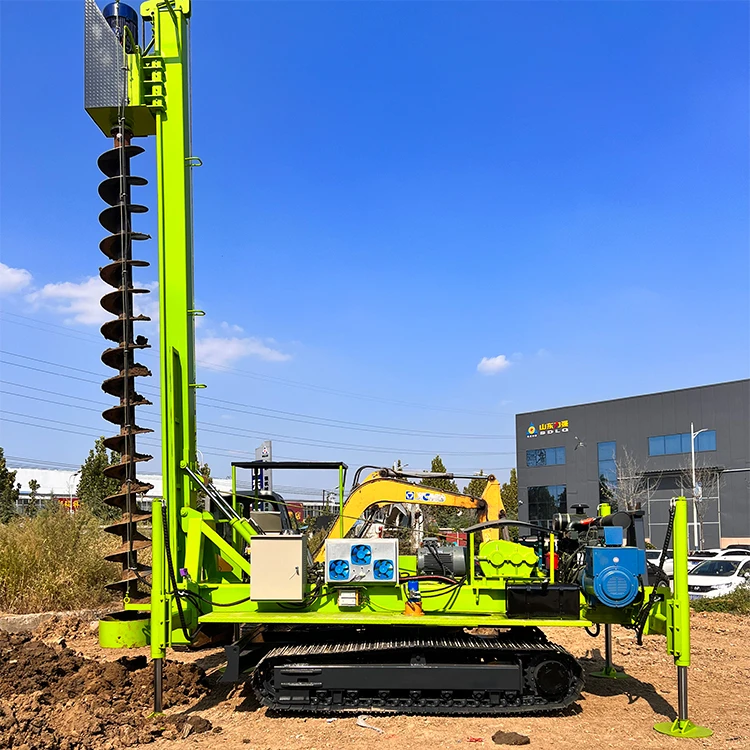
You should also check the pile's penetration rate. This is the rate at which the pile is driven into the ground. A consistent and appropriate penetration rate is a sign of a well - performing pile driver. If the penetration rate is too slow, it can lead to inefficiencies in the construction process.
5. Testing in Different Soil Conditions
Pile drivers often have to work in a variety of soil conditions, from soft clay to hard rock. To get a comprehensive understanding of the Small CFG Pile Driver's performance, it's important to test it in different soil types.
In soft soil, the pile driver should be able to drive piles relatively easily. However, it's important to ensure that the piles don't sink too quickly or too far, which can cause problems with the pile's stability. You can test this by driving piles in a soft - soil area and monitoring the pile's movement and the pile driver's performance.
In hard soil or rock, the pile driver will face more resistance. Test the pile driver's ability to break through this resistance and drive the piles to the required depth. If the pile driver struggles to drive piles in hard soil, it might need some adjustments or upgrades.
6. Monitoring the Vibrations
Vibrations are an inevitable part of the pile - driving process, but excessive vibrations can cause problems. They can damage nearby structures, disturb the surrounding environment, and even affect the pile driver itself.
To test the vibrations, you can use vibration sensors. Place these sensors around the pile driver and at different distances from the pile - driving site. Measure the amplitude and frequency of the vibrations. If the vibrations are too high, you might need to take steps to reduce them, such as using vibration - damping materials or adjusting the pile - driving parameters.
7. Comparing with Competitors
If possible, it's a good idea to compare the performance of your Small CFG Pile Driver with similar models from competitors. This can give you a better idea of how your product stacks up in the market. You can look at factors such as blow energy, striking frequency, pile - driving depth, and overall efficiency.
By comparing with competitors, you can identify areas where your pile driver excels and areas where it might need improvement. This information can be useful for both product development and marketing purposes.
8. Conclusion and Call to Action
Testing the performance of a Small CFG Pile Driver is a comprehensive process that involves checking multiple components and aspects. By following these steps, you can ensure that your pile driver is working at its best and delivering the results you need.
If you're in the market for a Small CFG Pile Driver, we've got you covered. We offer a range of high - quality Small CFG Pile Drivers, including the Crawler Spiral Pile Driver, Wheel Hydraulic Pile Driver, and Wheel Spiral Pile Driver. Our products are designed to meet the highest standards of performance and reliability.
If you're interested in learning more about our Small CFG Pile Drivers or want to discuss your specific needs, don't hesitate to reach out. We're here to help you make the right choice for your construction projects.
References
- Construction Equipment Handbook
- Pile - Driving Technology Manual
- Journal of Geotechnical and Geoenvironmental Engineering


