As a trusted supplier of Solar Pile Drivers, I've witnessed firsthand the critical role that pile driving speed adjustment plays in the efficiency and success of solar energy projects. In this blog, I'll delve into the various methods of adjusting the pile driving speed of a Solar Pile Driver, offering insights and practical tips based on my experience in the industry.

Understanding the Importance of Pile Driving Speed Adjustment
The speed at which piles are driven into the ground can significantly impact the overall quality and cost - effectiveness of a solar installation. Driving piles too quickly can lead to improper penetration, causing the piles to be unstable or not reach the required depth. On the other hand, driving piles too slowly can result in extended project timelines and increased labor costs. Therefore, having effective speed adjustment methods is essential for optimizing the pile - driving process.
Mechanical Speed Adjustment
Gearbox Adjustment
One of the most common mechanical methods for adjusting the pile - driving speed is through the gearbox. The gearbox in a Solar Pile Driver allows for different gear ratios, which can change the rotational speed of the driving mechanism. By selecting a higher gear ratio, the pile driver can operate at a faster speed, suitable for softer soil conditions where less force is required for penetration. Conversely, a lower gear ratio provides more torque and slower speed, which is ideal for harder soil or when driving larger - diameter piles.
For example, in a project where the soil is predominantly sandy, we can shift the gearbox to a higher gear to increase the pile - driving speed. This not only saves time but also reduces fuel consumption. However, when encountering rocky or clay - rich soil, a lower gear is necessary to ensure that the piles are driven to the correct depth.
Belt and Pulley Systems
Some Solar Pile Drivers use belt and pulley systems to adjust the speed. By changing the size of the pulleys, the speed ratio between the motor and the driving mechanism can be altered. A smaller pulley on the motor and a larger pulley on the driving shaft will result in a slower speed but higher torque, while the opposite configuration will increase the speed.
This method is relatively simple and cost - effective. It allows for quick adjustments on - site, depending on the soil conditions and the requirements of the project. For instance, if the initial pile - driving speed is too fast and the piles are not penetrating properly, the operator can easily change the pulleys to slow down the process.
Hydraulic Speed Adjustment
Flow Control Valves
Hydraulic systems are widely used in Solar Pile Drivers due to their high power density and precise control capabilities. Flow control valves are an important component in hydraulic speed adjustment. These valves regulate the flow rate of hydraulic fluid to the driving cylinders, thereby controlling the speed of the pile - driving action.
By adjusting the opening of the flow control valve, the operator can increase or decrease the flow of hydraulic fluid. A larger opening allows more fluid to flow, resulting in a faster pile - driving speed, while a smaller opening restricts the flow and slows down the process. This method provides a smooth and continuous speed adjustment, which is particularly useful when dealing with varying soil conditions during a single project.
Pressure Relief Valves
Pressure relief valves also play a role in hydraulic speed adjustment. These valves are set to a specific pressure limit. When the pressure in the hydraulic system exceeds this limit, the valve opens, diverting some of the hydraulic fluid back to the reservoir. This reduces the pressure and, consequently, the speed of the pile - driving action.
In practice, the operator can adjust the pressure setting of the relief valve to control the maximum speed of the pile driver. For example, in a situation where the soil is very hard and the pile driver is at risk of overloading, the pressure relief valve can be set to a lower pressure to prevent damage to the equipment and ensure a safe and controlled pile - driving speed.
Electronic Speed Adjustment
Variable Frequency Drives (VFDs)
Variable Frequency Drives are becoming increasingly popular in Solar Pile Drivers for speed adjustment. A VFD controls the speed of an electric motor by varying the frequency of the electrical power supplied to it. By changing the frequency, the rotational speed of the motor can be precisely adjusted.
VFDs offer several advantages. They provide a wide range of speed control, from very slow to very fast, and can be easily programmed to maintain a constant speed or change the speed according to a pre - set profile. For example, in a solar project where different types of piles need to be driven at different speeds, the VFD can be programmed to automatically adjust the speed for each type of pile.
Programmable Logic Controllers (PLCs)
Programmable Logic Controllers are used in conjunction with sensors and actuators to control the pile - driving speed. The PLC can receive input from various sensors, such as soil density sensors, depth sensors, and force sensors, and use this information to adjust the speed of the pile driver.
For instance, if the soil density sensor detects an increase in soil hardness, the PLC can automatically reduce the pile - driving speed to ensure proper penetration. This intelligent control system allows for real - time adjustment of the speed based on the actual conditions on - site, improving the overall efficiency and quality of the pile - driving process.
Factors Affecting Pile Driving Speed Adjustment
Soil Conditions
Soil conditions are one of the most important factors affecting pile - driving speed adjustment. Different types of soil, such as sand, clay, and rock, require different driving speeds. As mentioned earlier, softer soils like sand can generally tolerate faster driving speeds, while harder soils like rock demand slower speeds and more force.
In addition, the moisture content of the soil also plays a role. Wet soil may be more easily penetrated than dry soil, but it can also cause the piles to shift or become unstable if driven too quickly. Therefore, it is crucial to assess the soil conditions before starting the pile - driving process and make appropriate speed adjustments.
Pile Type and Size
The type and size of the piles being driven also influence the speed adjustment. Larger - diameter piles or piles with more complex shapes may require slower driving speeds to ensure proper installation. For example, helical piles may need to be driven at a slower speed to allow the helices to properly engage with the soil.
Similarly, the material of the pile can affect the driving speed. Steel piles may be driven at different speeds compared to concrete or wooden piles, depending on their strength and the soil conditions.
Conclusion
In conclusion, there are several effective methods for adjusting the pile - driving speed of a Solar Pile Driver, including mechanical, hydraulic, and electronic methods. Each method has its own advantages and is suitable for different situations. By understanding the factors that affect pile - driving speed and using the appropriate adjustment methods, solar energy project managers can optimize the pile - driving process, improve the quality of the installation, and reduce costs.
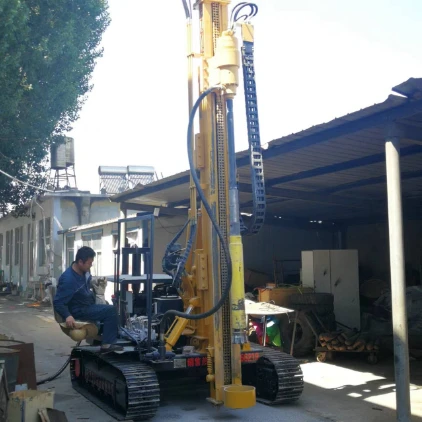
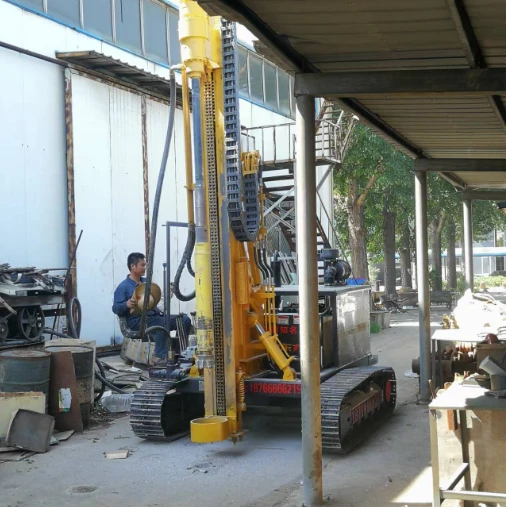
If you are considering a solar project and need a reliable Solar Pile Driver, we offer a range of high - quality products, such as the 4m Photovoltaic Pile Driver, solar drilling machine, and Down - the - hole Drilling Rig. Our experienced team can provide you with professional advice on pile - driving speed adjustment and other aspects of your project. We invite you to contact us to discuss your specific requirements and start a successful solar energy project together.
References
- Foundation Design and Construction Handbook, Second Edition, by Robert W. Day
- Hydraulic System Design and Troubleshooting by E. O. Doebelin
- Electric Drives: Concepts, Applications, and Control by Thomas G. Habetler