

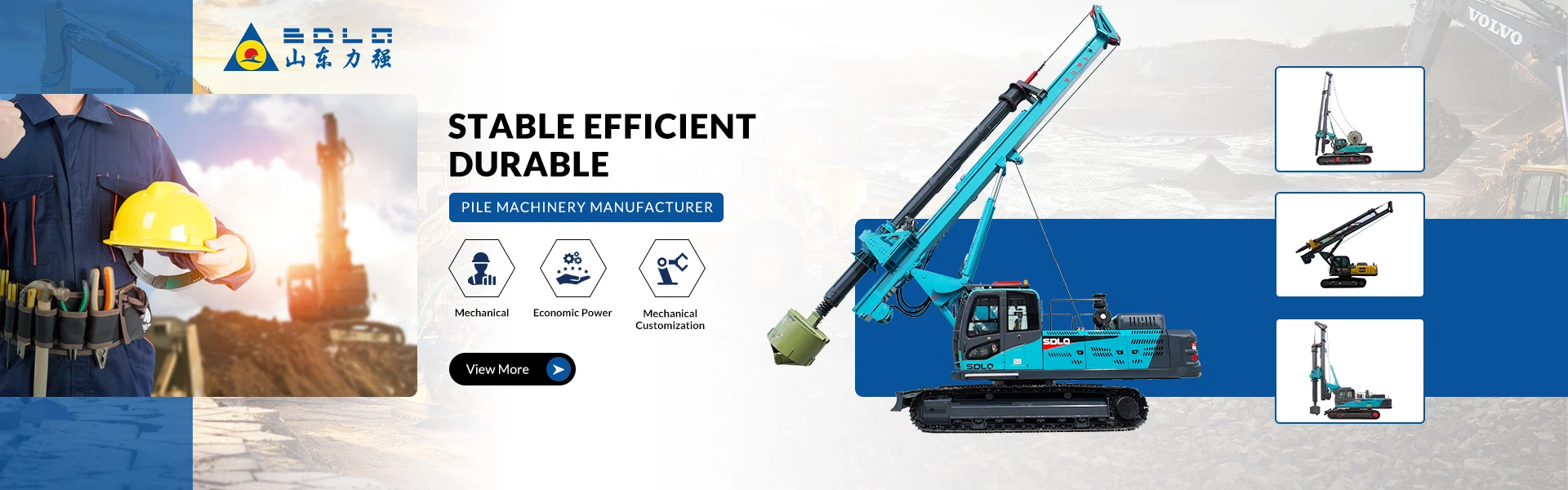
Rotary drilling adopts the form of power head, and uses powerful torque to directly rotate the drilling slag such as soil or gravel. First of all, it is necessary to distinguish the drilling process of rotary drilling from the impact drilling and manual drilling. Dry rotary drilling is the use of caterpillar rotary drilling directly drilled soil, and then the use of rotary bucket quickly out of the hole, out of the dry soil. Unearthed, placed around the rig, transported out of the site with other machinery. The rotary bucket is generally not too large, about one meter high, the rotary bucket is filled with disturbed soil to put soil, and then continue drilling.
Therefore, at least a loader is needed on the site to push away, which does not affect the next rotary bucket to put soil. Wet rotary drilling must first adjust the mud to drill, and the hole is similar to the impact drill, which requires mud. The drill has only rotary teeth without rotary bucket, the disturbed soil is stirred into mud in the hole and extracted, and the drill does not need to be lifted up every time.
Instead of dry soil, mud comes out. There should be a sedimentation tank in the site, and the sand gravel and thick mud under the precipitation should be dug out with an excavator. Dry rotary drilling drilling into the hole without mud, holes in the water is easy to collapse holes. So dry rotary drill does not need mud wall protection. Wet rotary drilling holes are squeezed and rotated by the bit in the process of drilling to form a mud wall on the hole wall, separating the mud and groundwater.


