

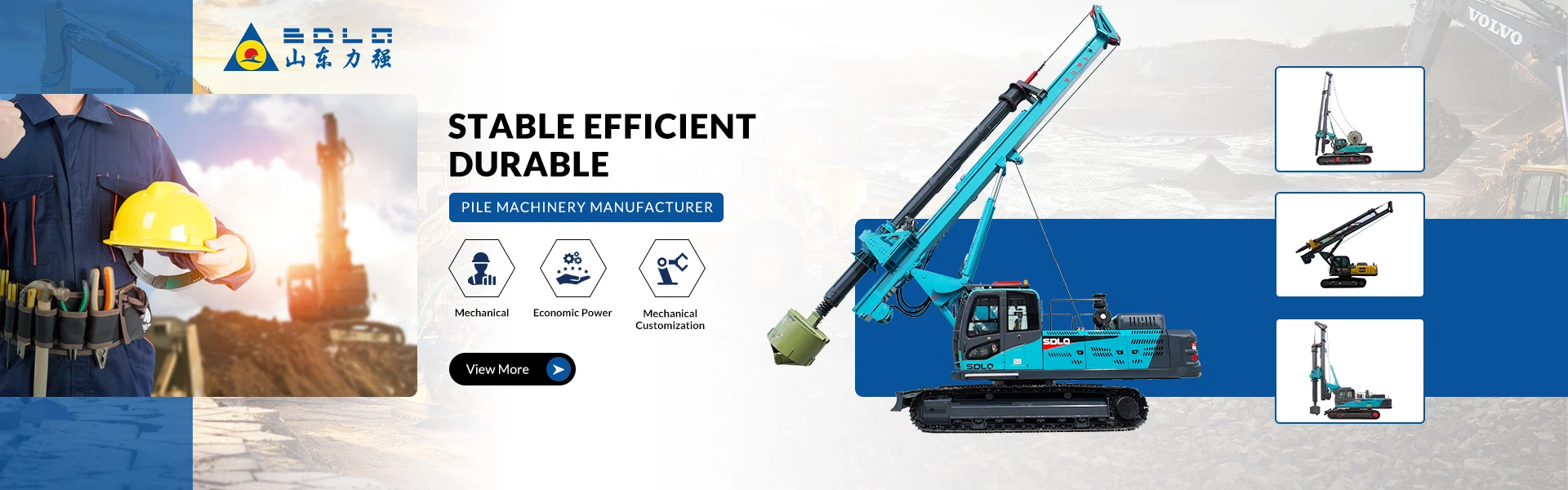
More and more construction projects are using it. Various problems can arise during use or when it's parked. Below are some common problems with rotary drilling rigs and their solutions.#kelly drilling#

1. Borehole Collapse
During the grouting process, if the mud level in the well casing suddenly rises and overflows, then drops sharply and bubbles emerge, borehole collapse should be suspected. A sounding hammer can be used for detection. If the sounding hammer, originally suspended on the concrete surface, is now buried and cannot be pulled up, or if the sounding hammer does not reach the original depth when probing the concrete surface, and the difference is significant, this confirms borehole collapse.
2. Borehole Deviation#kelly drilling#
When borehole deviation or bending occurs, the cause should be analyzed and addressed. Generally, the drill bit can be suspended at the deviation point and repeatedly swept to straighten the borehole. If the deviation is severe, cohesive soil should be backfilled to the deviation point, and drilling should resume after the soil has settled and compacted.
3. Enlarged/Constricted Boreholes
When enlarged or constricted boreholes occur, measures should be taken to prevent borehole collapse and excessive drill bit oscillation. Shrinkage is caused by excessive wear of the drill bit, untimely welding repair, or the presence of water-swellable soft soil, clay, or mudstone in the formation. For the former, timely welding repair of the drill bit is crucial; for the latter, mud with a low water loss rate should be used for wall protection. If shrinkage has already occurred, the drill bit should be repeatedly swept up and down at that point to enlarge the borehole diameter.
4. Drill Bit Clogging/Buried Drill Bits
Drill bit clogging and buried drill bits often occur in rotary drilling (including submersible drilling rigs) and percussion drilling. In such cases, the mud consistency, drill cuttings inlet and outlet, drill pipe inner diameter, and cuttings removal equipment should be checked and calculated, and the drilling progress should be controlled appropriately. If the clogging is severe, drilling should be stopped, the drill bit removed, and the drill cuttings cleared.
5. Stuck Drill Bits#kelly drilling#
Stuck drill bits often occur in percussion drilling. When stuck, it is not advisable to forcefully lift; only gentle lifting is recommended. If gentle lifting fails, a small percussion drill bit can be used to impact the drill bit, or methods such as flushing or suction can be used to loosen the drill cuttings around the drill bit before lifting it out.
6. Fallen Objects from Drill Bore
When objects fall from the drill borere, they should be retrieved quickly using tools such as retrieval forks, hooks, and rope snares. If the fallen object is buried in mud or sand, the mud and sand should be cleared first, as described above, to allow the retrieval tools to contact the object before retrieval.
Under no circumstances should construction personnel enter boreholes without casings or other protective facilities to handle malfunctions. When it is necessary to enter a borehole with casings or other protective facilities, the borehole should be checked for the absence of harmful gases, and all necessary safety equipment, including those for preventing poisoning, drowning, and landslides, should be prepared before any action is taken.#kelly drilling#


