

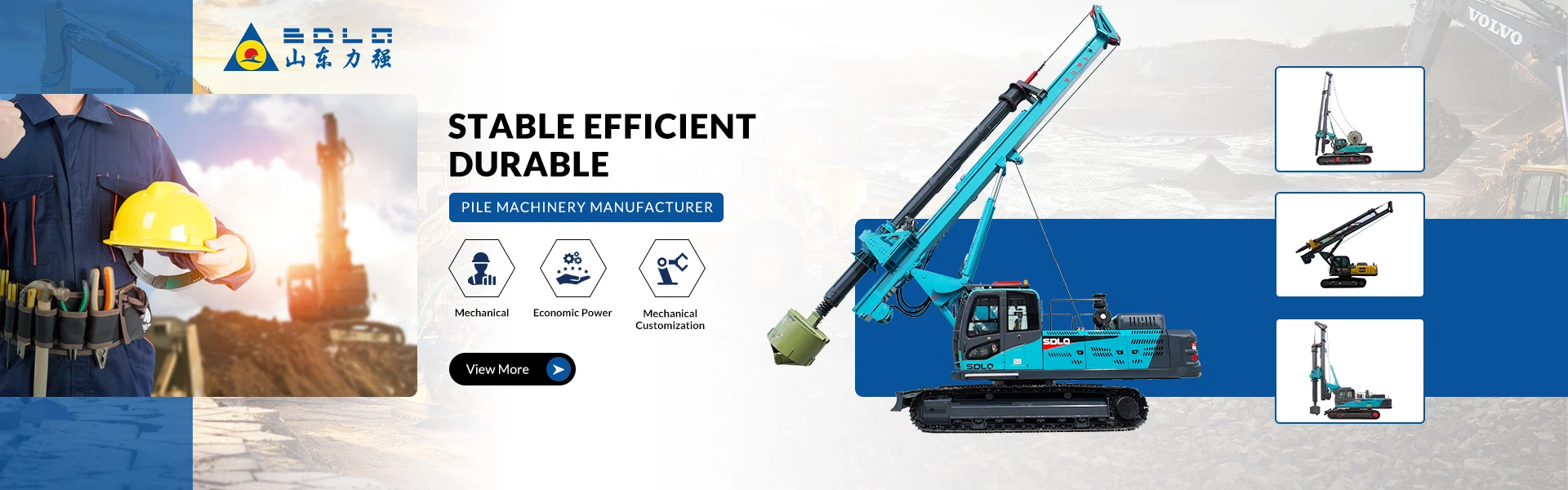

Rotary drilling rigs, slewing drilling rigs, and traditional impact drills constitute the three main pieces of equipment used in bored pile construction. This article will focus on the differences between rotary drilling rigs and slewing drilling rigs.#hydraulic drilling machine price#
Rotary drilling rigs, with their unique travel function and mast luffing mechanism, can precisely position the drill bit at the pile location. Guided by the mast, the drill rod lowers the bucket drill bit with a valve. Utilizing the torque provided by the power head and the pressure from the pressurizing device, the drill bit rotates to break up the rock and soil and directly loads the soil into the drill bit. Subsequently, the drilling rig's lifting device and telescopic drill rod lift the drill bit out of the hole for soil removal, and this cycle continues until the designed depth is reached.
Slewing drilling rigs, on the other hand, use a power unit to drive the slewing mechanism, which in turn drives the drill rod and drill bit to rotate and cut the strata. These rigs are commonly used in bored pile construction with mud-walled drilling and are classified into two types based on the mud circulation method: forward circulation and reverse circulation. In forward circulation rotary drilling, the mud pump delivers mud into the drill pipe cavity, cleaning the bottom of the hole and carrying rock cuttings to the borehole opening for purification and recycling. Reverse circulation rotary drilling, on the other hand, uses pump suction, air lift, or jetting to extract mud from the hole. The mud, carrying drill cuttings, is drawn out of the hole from the drill pipe cavity and then discharged to a mud pit for sedimentation and circulation. Comparatively, reverse circulation drilling is faster and provides better borehole cleaning.#hydraulic drilling machine price#
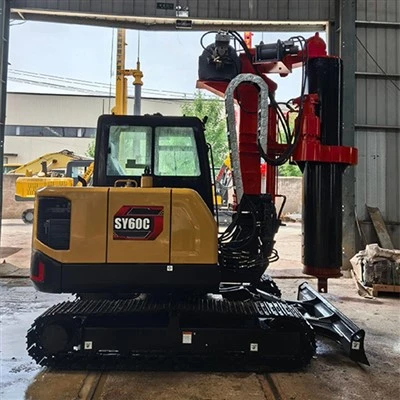
1. Comparative Analysis of the Advantages and Disadvantages of Rotary Drilling Rigs and Slewing Drilling Rigs: In bored pile construction, rotary drilling rigs and slewing drilling rigs each have their unique applications and advantages. Rotary drilling rigs, with their precise positioning capabilities and efficient drilling methods, perform exceptionally well in hard soil and gravel layers. Slewing drilling rigs, especially during reverse circulation drilling, offer faster speeds and better hole clearing, giving them an advantage in soft soil and sandy soil layers. However, the choice of equipment depends on the specific construction environment and requirements.
2. Environmental Impact: Rotary drilling rigs utilize dry drilling or mud-free drilling methods, significantly reducing mud consumption to only 1/10 to 1/20 of that used in reverse circulation drilling. This results in a cleaner construction site and significantly reduces environmental pollution. Furthermore, their low vibration and low noise characteristics further minimize the impact of construction on the surrounding environment.
3. Drilling Conditions: Rotary drilling rigs feature a tracked design, providing excellent mobility and adaptability to various terrain conditions, demonstrating strong environmental adaptability.
4. Sludge Thickness: Rotary drilling rigs using dry drilling or mud-free drilling methods produce significantly less sludge compared to reverse circulation drilling.
5. Hole Formation Efficiency: Rotary drilling rigs possess high rotational torque, and their self-moving, self-erecting mast, and convenient hole-positioning features greatly reduce auxiliary time and improve time utilization. Furthermore, their telescopic drill rod design further accelerates hole formation speed, typically 3 to 5 times faster than reverse circulation drilling.
6. Economic Benefits: Although rotary drilling rigs have relatively higher equipment costs, their high efficiency gives them a significant advantage in total cost accounting. Conversely, reverse circulation drilling rigs have lower equipment costs, but the cost per drilling session is relatively higher.#hydraulic drilling machine price#


