

Under the scorching summer sun, a former master's graduate from a top-tier university now guards the drilling rigs on a construction site. Wearing a safety helmet, the engineer shoulders the responsibility of "drill watcher," ensuring the safety of every rig.#mobile drilling rig#
To those who guard the drills, you may not know that bored piles play a crucial role in infrastructure construction. Their high efficiency, excellent adaptability, and safety have led to their widespread application in construction, transportation, bridges, and even hydropower and ports. However, facing a market saturated with drilling rigs, making the right choice has become a challenge for us drill watchers. The ever-changing geological conditions and the varying performance characteristics of different drilling rigs make selecting the ideal model particularly difficult in this complex environment. But it is precisely this challenge that inspires our pursuit of both low cost and high quality in engineering projects. Let's explore the answer to this question together.
First, let's understand impact drilling. It uses a winch to lift the drill bit to create a hole through impact, followed by the removal of drill cuttings and cleaning of the hole. This design enables it to perform drilling operations excellently even in complex geological conditions such as pebble layers and hard rock formations. Its advantages lie in its simple process and high adaptability, capable of handling various geological conditions. However, it also has some drawbacks, such as relatively low drilling efficiency, longer time required for slag removal and bottom cleaning, and the possibility that hole quality can be affected by factors such as hole enlargement, drill rig relocation, drill bit jamming, and drill bit loss.#mobile drilling rig#

Rotary drilling rigs use the rotation of the drill rod and drill bucket to load soil cuttings into the bucket and lift them out. Their working principle includes the rotation of the drill bucket, digging and lifting, unloading, and mud replacement for borehole wall protection; these steps are repeated until a hole is formed. This type of drilling rig is suitable for soft soil strata such as cohesive soil, silt, sand, and silty clay, as well as moderately weathered rock and gravel layers.
Rotary drilling rigs are characterized by their self-powered operation, superior performance, high drilling efficiency, and good construction quality. Furthermore, they effectively reduce dust and mud pollution and have automatic mast verticality adjustment and borehole depth measurement functions. However, it should be noted that rotary drilling rigs are relatively expensive and not suitable for drilling in hard rock formations.
Rotary drilling rigs use mechanical forward and reverse rotation to propel the drill rod deeper into the ground to form a borehole, while simultaneously using mud to carry the broken drill cuttings out of the hole. The forward circulation method involves mud being injected into the borehole through the center of the drill rod and rising with the drill cuttings before being discharged into a sedimentation tank; the reverse circulation method is the opposite.
Rotary drilling rigs excel in pile driving in soft soil and sand layers. Their rapid driving speed and suitability for large-diameter, long friction piles have made them widely used in the construction industry. However, rotary drilling may face challenges when drilling through gravel and sand layers.
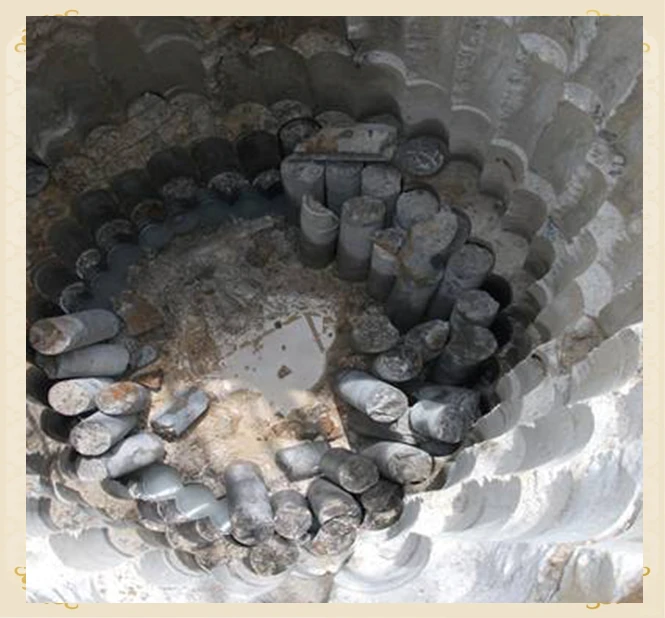
Water-cooled drilling is a highly efficient hole-forming technique. It uses a concrete core drill to extract cylindrical rock cores layer by layer around the outer circumference of the pile foundation, creating a free face. The remaining rock core is then broken into pieces, and the broken pieces are extracted one by one. This process is repeated until the desired hole depth is reached.
Water-cooled drilling is particularly suitable for drilling in hard rock formations. Its advantages include regular hole formation, no terrain limitations, no need for blasting, and minimal disturbance to the borehole wall. Compared to percussion drilling, water-cooled drilling features simpler equipment, easier operation, smaller footprint, less mud discharge, environmental friendliness, and more stable construction quality. However, it should be noted that water-cooled drilling requires a longer time and greater manpower.
Auger Drilling: Auger drilling technology for bored piles is widely used in industrial and civil construction. It is particularly suitable for clay, sand, and artificial fill foundations above groundwater, efficiently drilling holes and pouring concrete to form piles. This technology is favored for its small borehole diameter, fast drilling speed, convenient relocation, low noise, and minimal environmental impact. However, it is worth noting that augers have difficulty drilling into moderately weathered or other hard rock formations, and drilling through pebble layers is also quite challenging.
Submersible Drilling Rigs: Submersible drilling rigs are devices specifically designed for rotary drilling underwater or in mud. They are widely used in foundation construction for numerous projects, including buildings, transportation, bridges, water conservancy, power, and port terminals. Their working principle is as follows: a submersible motor transmits power to the output shaft through a reducer, which in turn drives the drill bit to cut the soil and rock. During operation, the power unit extends to the bottom of the hole, directly driving the drill bit to rotate and cut, while the drill rod is mainly responsible for connecting and transmitting torsional resistance and transporting mud and water, discharging drill cuttings out of the hole through positive or reverse circulation.
Submersible drilling rigs are highly regarded for their superior technical characteristics, such as high efficiency, vibration-free operation, low energy consumption, low noise, and high hole verticality. However, it should be noted that submersible drilling rigs are not suitable for geological conditions such as gravelly soil layers, weak interlayers thicker than 10cm, pebble strata, or hard rock.

These different types of submersible drilling rigs each have their own unique advantages and disadvantages, so several key factors must be considered when selecting one. These factors include the specific conditions of the project, the geological conditions, the actual construction requirements, and the performance parameters of the equipment. We will now discuss these factors in detail using a drilling rig selection table.

When facing different geological conditions, the selection of bored pile drilling rigs requires full consideration of their differences. Construction units must conduct a comprehensive and in-depth analysis of the geological conditions of the construction area, and comprehensively evaluate multiple aspects such as the working efficiency, safety, economy, and impact on the surrounding environment of the bored pile drilling rig. Through these comprehensive considerations, equipment with superior overall performance in all aspects can be selected for construction, thereby ensuring high-efficiency and high-quality completion of the project.#mobile drilling rig#


